 Reviews

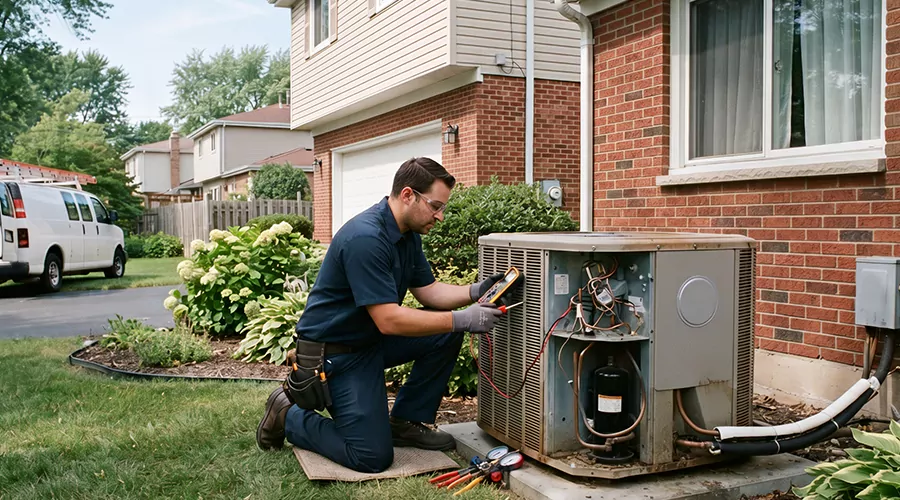
HVAC repair cost typically ranges from $130 to $2,000 in 2026 with an average near $350. Minor problems can stay around $100 to $300. Major compressor or coil failures can reach $3,000. The failed component has the greatest effect on the final bill.
A repair invoice normally combines diagnosis with parts and labor. Emergency timing can raise the total further. Your system type also matters because repairing a furnace uses different components than repairing a central air conditioner.
The first step is identifying what actually failed. Replacing parts based only on a symptom can turn a relatively small problem into an unnecessary four-figure expense.
What Is the Average HVAC Repair Cost in 2026?
Most homeowners spend about $350 on a typical HVAC repair in 2026. Current national estimates place the common professional range between $130 and $2,000. Minor fixes can stay close to $100 while major components can push an invoice toward $3,000.
The range is broad because HVAC covers several equipment types. A thermostat problem does not cost the same as a compressor failure. A service call also creates an initial expense before the actual repair begins.
Angi reports that the first diagnostic visit commonly costs $100 to $250. Labor after diagnosis can run about $100 to $250 per hour.
Repair Level Planning Table
| Repair level | Typical 2026 range |
|---|---|
| Minor correction | $100 to $300 |
| Common repair | $300 to $700 |
| Larger component repair | $700 to $1,500 |
| Major repair | $1,500 to $3,000 |
| Initial service call | $100 to $250 |
The average should be treated as a starting point. The part that failed matters much more than the national average.
How Much Does HVAC Repair Cost by System Type?
Repair prices change by equipment type because each system uses different components. Current 2026 data places central AC work near $450 to $2,000. Furnace repairs often range from $130 to $1,200. Heat pump problems commonly fall between $200 and $2,000.
System Type Repair Ranges
| System type | Typical 2026 repair range |
|---|---|
| Central air conditioner | $450 to $2,000 |
| Furnace | $130 to $1,200 |
| Heat pump | $200 to $2,000 |
| Mini-split | $300 to $550 |
| Split HVAC system | $200 to $300 |
| Packaged system | $450 to $550 |
The AC repair cost can climb quickly when a sealed-system component is involved. HomeAdvisor places many common AC repairs between $172 and $664, while larger failures sit outside that common range. The furnace repair cost often remains lower for ordinary ignition problems. HomeAdvisor reports a common furnace range of $133 to $505, with a broader professional range extending to $1,475.
A heat pump can produce higher bills because the equipment handles both heating and cooling. That means the same outdoor system operates through more of the year.
How Much Do Common HVAC Parts Cost to Repair?
Individual components can cost about $75 for basic drain work or as much as $3,000 for a compressor. Electrical parts usually sit toward the lower end. Motors fall in the middle. Refrigerant leaks and major sealed-system components create some of the highest repair bills.
Common HVAC Parts Pricing
| HVAC repair | Typical cost |
|---|---|
| Drain line cleaning | $75 to $200 |
| Capacitor | $100 to $250 |
| TXV | $100 to $500 |
| Circuit board | $100 to $600 |
| Thermostat | $150 to $350 |
| Transformer | $200 to $600 |
| Fan motor | $100 to $700 |
| Blower motor | $200 to $700 |
| Refrigerant recharge | $100 to $500 |
| Refrigerant leak | $250 to $1,500 |
| Coil replacement | $600 to $2,400 |
| Compressor | $800 to $3,000 |
The air conditioner repair cost becomes particularly important when the evaporator coil or compressor fails. A symptom does not identify which row applies. For example, an outdoor unit that hums without starting can have a capacitor problem, but the compressor can create a similar symptom. That difference can mean hundreds versus thousands of dollars. Testing matters before replacement.
What Extra Charges Can Appear on an HVAC Repair Bill?
The final invoice can include more than the replacement part. Diagnostic fees commonly run $100 to $250 in 2026. Hourly labor can also reach $250. Emergency service can add an hourly premium. Inspections or permits may create another charge depending on the work required.
The HVAC service cost usually begins with the diagnostic visit. Some contractors credit that charge toward an approved repair, while others bill diagnosis separately. Ask how the fee works before the appointment.
Emergency timing creates another variable. Angi reports that after-hours repairs can add roughly $40 to $80 per hour.
Local pricing can also change the result. Current Angi data puts average repair cost around $330 in Texas, while New York averages about $500 under its national state comparison. Separate city data shows the same effect. Dallas averages about $361 with a reported range of $134 to $2,062, while New York City averages about $394 with a range of $146 to $2,252. The same failed part can therefore receive different quotes in different markets.
How Does a Small HVAC Problem Become Expensive?
HVAC problems often progress from a small control issue to a larger operating failure when the original cause remains unresolved. A clogged drain can begin below $200. Electrical problems can move into several hundred dollars. Major motor or refrigerant failures can eventually push repairs above $1,000.
Problem Progression Table
| Stage | What you notice | Possible issue | 2026 range |
|---|---|---|---|
| Early | Minor operating change | Drain or thermostat | $75 to $350 |
| Developing | Startup becomes inconsistent | Capacitor or control | $100 to $600 |
| Airflow loss | Weak airflow appears | Motor or duct issue | $200 to $2,000 |
| Cooling loss | System runs without normal cooling | Refrigerant problem | $250 to $1,500 |
| Major failure | Outdoor system cannot operate normally | Compressor | $800 to $3,000 |
A useful example is a weak capacitor. The part can begin causing difficult starts before complete failure, and ignoring repeated startup trouble can place more stress on the motor it supports. Another example is refrigerant loss. EPA states that leaks can increase operating and maintenance costs and advises homeowners to use technicians certified for refrigerant service. Small symptoms should therefore be evaluated by what they indicate rather than how uncomfortable the house feels today.
What Warning Signs Mean the System Needs Diagnosis?
A change in normal system behavior deserves attention when it persists through more than one operating cycle. Weak airflow and repeated shutdowns are useful clues. Unusual outdoor sounds also matter. A breaker that repeatedly trips requires more caution because electrical protection can be responding to an unresolved fault.
- The thermostat calls for cooling but room temperature keeps rising.
- The system starts then shuts down repeatedly.
- Airflow becomes much weaker than normal.
- The outdoor unit produces a new humming sound.
- A breaker trips during operation.
- Water appears around the indoor equipment.
- Ice develops near the indoor coil.
- Heating performance drops suddenly.
- The system needs several attempts before starting.
- Electricity use rises while comfort falls.
These signs should be recorded before parts are replaced. A humming condenser does not automatically mean compressor failure, and weak airflow does not automatically mean blower failure. A clogged filter can create a similar comfort problem. The useful question is what testing confirms the cause.
What Safe DIY Checks Can You Do First?
Homeowner troubleshooting should stay limited to accessible controls and airflow items. Check the thermostat setting first. Inspect the filter next. Look for visible water around the indoor unit. You can also observe whether the indoor blower or outdoor equipment responds without opening electrical panels.
Use this order:
- Confirm the thermostat display works.
- Select the correct operating mode.
- Create a clear temperature request.
- Wait through the normal startup delay.
- Check airflow at several registers.
- Inspect the air filter.
- Look for visible condensate water.
- Observe the outdoor equipment from a safe distance.
Do not remove electrical access panels. Do not test capacitors unless you have appropriate electrical training. Avoid repeated breaker resets. Do not connect refrigerant gauges as a homeowner diagnostic step. EPA states that attaching gauges can qualify as work that may violate the integrity of a refrigerant circuit. Section 608 certification applies to covered refrigerant service.
The goal is to collect useful symptoms. It is not to prove which internal component has failed.
When Should You Call a Professional?
Professional diagnosis is appropriate when thermostat and filter checks do not explain the problem. It is also warranted after repeated breaker trips or persistent coil freezing. Refrigerant work requires specialized handling. Internal electrical testing also involves hazards that make trial-and-error homeowner repairs a poor choice.
A technician can test whether the correct voltage reaches the equipment. Control voltage can then be checked, and motor amperage can show whether a blower is operating outside its normal range. A capacitor can be measured against its rated value. Refrigerant conditions require another set of tests. EPA advises homeowners to work with service providers that employ Section 608-certified technicians for refrigerant handling.
The HVAC repair service should provide a diagnosis before expensive work begins. Ask what failed and what measurement confirmed the failure. Request the repair price before authorizing the work. A clear diagnosis gives you something useful to compare when the estimate is large.
When Is HVAC Replacement Better Than Repair?
Replacement deserves consideration when a major repair reaches a large share of the cost of a new system. Equipment age also matters. Angi suggests considering replacement when repairs exceed about 50% of replacement cost or when the equipment is near the end of its expected service life. The calculation should not be based on age alone. A 14-year-old system needing a $150 part can still be worth repairing, while a similar system needing a $3,000 compressor deserves a different comparison.
Look at repair history too. Several expensive repairs within two seasons can change the financial case. Warranty coverage matters as well. A compressor covered under a parts warranty can make repair much more attractive than an identical failure without coverage.
EPA states that homeowners are not required to replace older equipment simply because it uses HCFC-22. The agency advises evaluating equipment condition before making that decision. Compare actual repair cost with actual replacement quotes. Do not compare an installed repair with an online equipment-only price.
How Can You Reduce Future HVAC Repair Costs?
Preventive care cannot eliminate every breakdown, but it can reduce avoidable operating problems. Filter replacement protects airflow, keeping drainage clear reduces the chance of condensate shutdown, and seasonal inspection can identify developing electrical problems before they create a complete heating or cooling failure.
The HVAC maintenance cost commonly falls between $75 and $200 for a standard annual tune-up. Service contracts can run about $150 to $500 per year. Compare that with a compressor repair that can reach $3,000. Maintenance does not guarantee that the compressor will last forever, but it can reveal related problems before they become more severe.
Keep outdoor equipment clear of loose debris, replace the filter before it becomes heavily restricted, and watch the drain area during cooling season. Record new noises. The useful preventive habit is noticing change. A system that suddenly takes longer to start is giving you information before it stops completely.
Conclusion
HVAC repair cost averages about $350 in 2026 with most professional repairs falling between $130 and $2,000. Minor electrical or drain problems can remain below $300 while compressor and coil work can enter four figures. Confirm the failed component before approving a large repair. This week, record one normal heating or cooling cycle so future changes are easier to recognize.
Frequently Asked Questions
A typical initial service call costs about $100 to $250 in 2026. Some companies apply that charge toward an approved repair while others bill it separately.
Yes. Angi reports that after-hours service can add roughly $40 to $80 per hour beyond normal repair pricing.
Normal wear is generally handled as maintenance rather than a covered loss. Damage caused by a specific covered event can be treated differently under the terms of the policy.
Some home warranty plans cover qualifying HVAC failures after a service fee. Coverage limits and exclusions differ so the contract should be checked before repair authorization.
Routine appointments can be easier to schedule outside peak heating or cooling demand. The actual repair price still depends primarily on the failed component and local labor rates.
A second diagnosis can be useful before approving a major compressor or coil replacement. Ask each technician what testing confirmed the failed component and compare the complete repair scope.